Doodles are wonderful dogs with a genuinely demanding coat, and those two facts travel together. The poodle side contributes hair that grows continuously and curls; the retriever or spaniel side contributes shedding. The mix means loose hair gets caught in curls instead of falling out, and caught hair becomes tangles, and tangles become mats. Nobody failed the dog. The coat simply needs a system.
This is that system: the brushing method that actually reaches the skin, the spots that mat first, and the honest explanation of why a groomer in Charlotte sometimes recommends starting over with a short cut.
Why the brush you own may be lying to you
Run a standard brush over a doodle and the top layer looks fluffy and done. Underneath, against the skin, a felted layer can be building undisturbed, because the brush rode over it. The test is a fine metal comb. If the comb glides from skin to tip, the coat is truly brushed out. If it snags, there is tangle below the surface no matter how good the dog looks in photos.
The tool pairing that works is a slicker brush for working through the coat and a steel comb for checking your work. A detangling spray or a light mist of water with a drop of conditioner helps the brush move without breaking hair. Dry brushing a dirty, tight tangle mostly tears coat; slightly damp is easier on everyone.
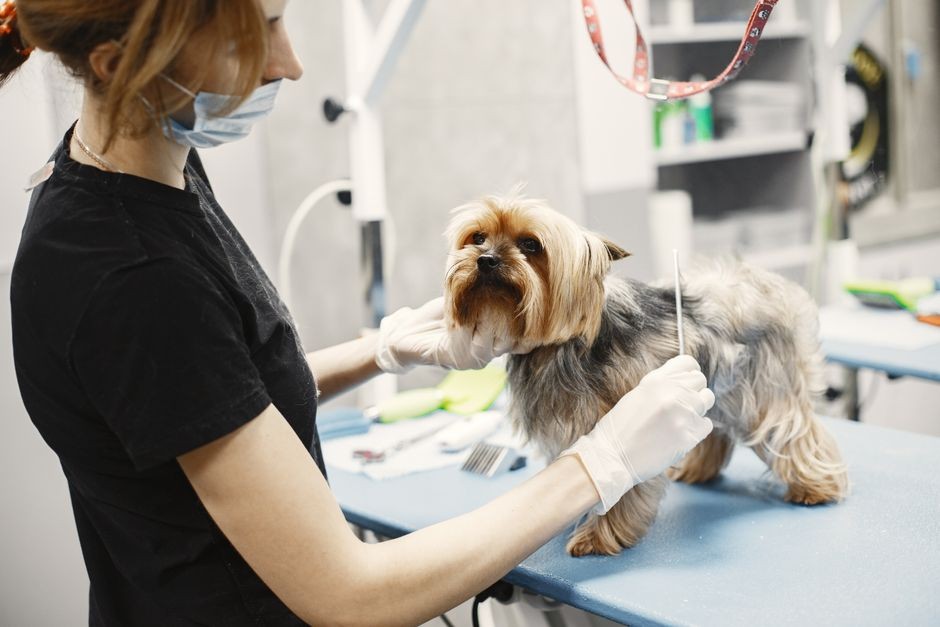
Line brushing, step by step
- Start low and work in lines. Part the coat horizontally near the belly, hold the hair above the line up with one hand, and brush the exposed layer downward from skin to tip.
- Move up one line at a time. Let the brushed layer fall, part a new line just above it, and repeat until the whole side is done. This is slower than surface brushing and it is the whole point.
- Comb check every section. Run the steel comb through each finished area. Where it catches, go back with the slicker and work that spot from the ends inward.
- Hit the friction zones deliberately. Behind the ears, under the collar, in the armpits, where the harness sits, the belly, and the tail base mat first. Check them even on quick days.
- Keep sessions short and frequent. Fifteen focused minutes three times a week beats an hour once a month, for the coat and for the dog's opinion of the process.
- Stop at tight, skin-close mats. A mat that will not separate with fingers and brush is no longer a home job. Pulling at it hurts, and cutting it out with scissors risks the skin folded inside it.
The shave-down conversation, honestly
When a coat arrives felted into a solid layer, a groomer has two options: spend hours pulling tools through it while the dog stands and endures it, or clip under the mat and start fresh. Most groomers, including the team at Kibbles & Klips Pet Grooming Salon, choose the dog's comfort. Clippers pass under a mat, between it and the skin, which is why the resulting cut is short. It is a physical limit, not a preference and not a punishment.
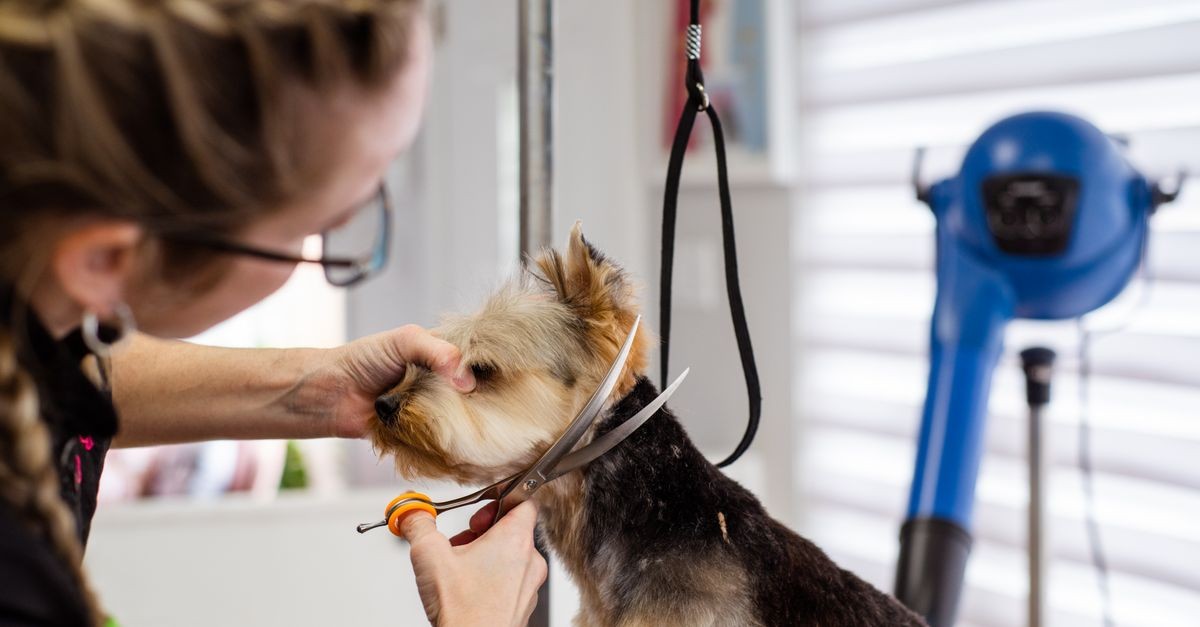
Rainy weeks deserve a mention, because wet doodle coats tangle faster than dry ones. Towel the dog thoroughly after wet walks, work a brush through the legs and chest once the coat is damp rather than soaked, and never let a wet dog rub itself dry on the carpet, which is basically a matting machine powered by enthusiasm.
Hair grows back, usually softer-looking at first because the damaged ends are gone. The useful move after a shave-down is to book the next two appointments on the way out, at the four to six week interval most doodle coats need, and to start line brushing while the coat is short and easy. Habits built on a short coat carry over as it grows. That is how the cycle actually ends.
Common questions
How long should my doodle's coat be to stay manageable?
Length is a brushing budget. If you can line brush and comb check the whole dog in about fifteen minutes a few times a week, longer is fine. If life is busy, a shorter cut is the kinder choice and looks tidy far longer.
Can a mat be spot-removed without shaving the whole dog?
Often, yes. A single mat behind an ear or in an armpit can usually be clipped out on its own. The full short cut becomes necessary when matting is widespread and felted across the body, not because of one bad spot.
Do doodles really not shed?
Most shed far less than a retriever, but low shedding is exactly what causes the matting. The hair that would have fallen on your floor stays in the coat instead, which is why the brushing work moves from the vacuum to you.
Photos in this guide are representative stock images.
← All guides from Kibbles & Klips Pet Grooming Salon← Back to Kibbles & Klips Pet Grooming Salon