Twice a year, a double coated dog in Charlotte sheds the undercoat it grew for the season just ending, and for a few weeks the house, the car, and your clothes all show it. A de-shedding treatment is the professional answer to that blowout: a bath, a thorough forced air dry, and systematic undercoat removal that takes out in one visit what would otherwise drift out over a month.
It is also a treatment with clear limits. It does not stop shedding, no honest treatment does, and it is not a haircut. Use the checklist below to judge what a session should include and if your dog is a candidate.
What a double coat actually is
Two layers do two jobs. The outer guard coat is longer, coarser, and water resistant. The undercoat is soft, dense, and insulating, and it is the layer that sheds in volume. In spring the winter undercoat comes out; in fall a lighter summer coat gives way to a heavier one. Piedmont weather, with its warm spells in February, sometimes triggers an early, ragged blowout that drags on for weeks.
Loose undercoat that is not removed packs down, holds moisture and heat against the skin, and mats in the dense areas behind the ears and under the legs. Removing it lets air circulate through the guard coat, which is how the coat actually regulates temperature in a Charlotte summer.
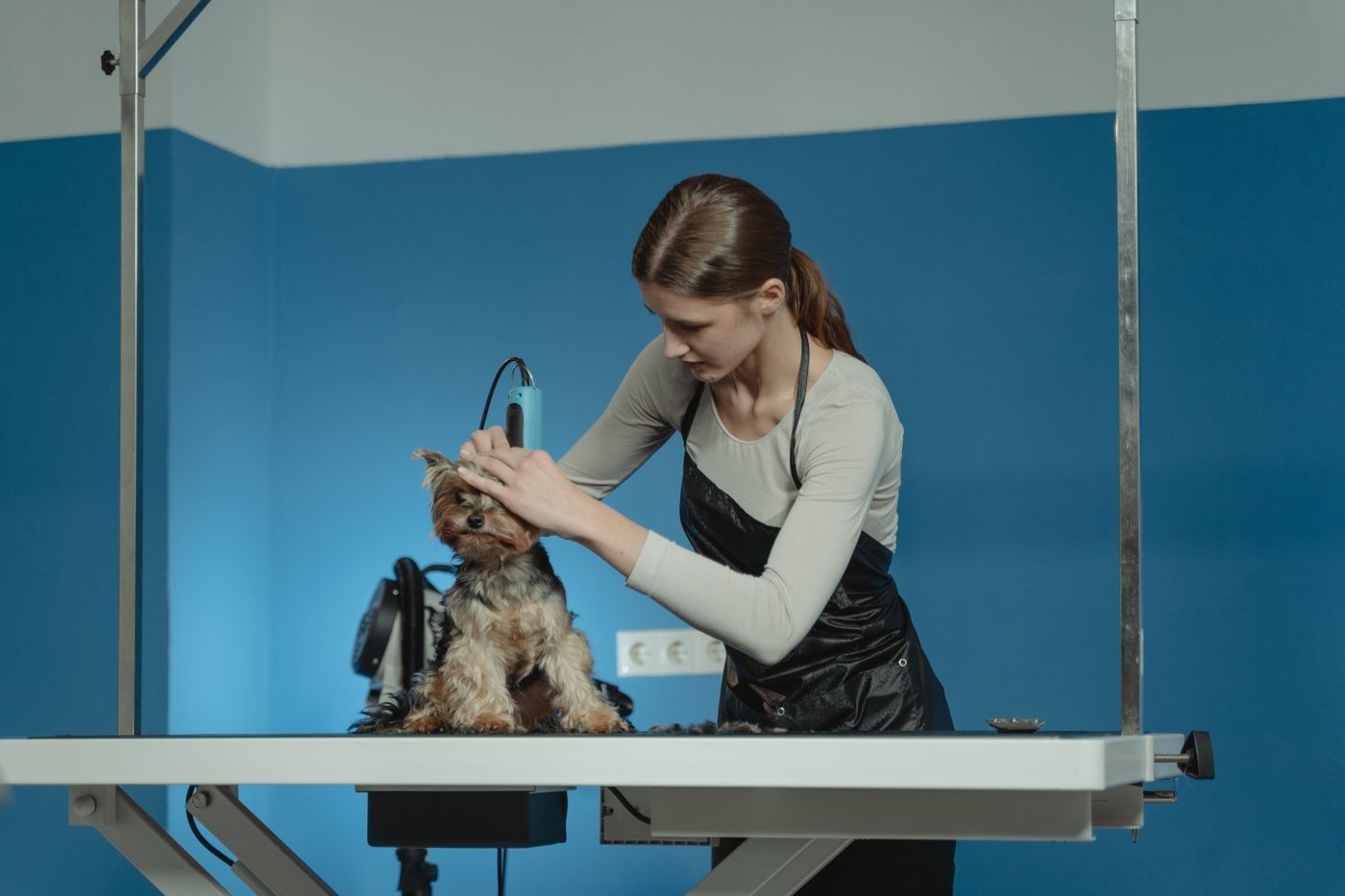
De-shedding session checklist
- Brush-out before the bath: loose undercoat comes out dry first. Fail sign: the dog goes straight into the tub with a packed coat, which turns loose hair into wet felt.
- Full bath with coat worked to the skin: shampoo reaches through the guard coat. Fail sign: a quick surface wash that leaves the undercoat untouched and still shedding.
- Forced air drying: high velocity air blows loose undercoat out of the coat in volume. Fail sign: a cage dry or towel dry, which leaves most loose hair in place.
- Rake and comb pass after drying: an undercoat rake followed by a comb check section by section. Fail sign: no comb check, so packed areas behind ears and thighs get missed.
- No clipping of the guard coat: length stays as it grew. Fail sign: anyone suggesting a shave to reduce shedding, which damages the coat's structure.
- Home plan given: a brushing rhythm for the weeks after. Fail sign: no guidance, so the next blowout catches you exactly as unprepared.
Why you never shave a double coat
Shaving feels logical: less hair, less shedding, cooler dog. All three assumptions fail. The dog sheds the same undercoat at the same rate, just in shorter pieces. The guard coat grows back slowly and sometimes unevenly, and without it the undercoat mats faster and insulates worse, because the two layers are designed to work together with air between them. Sunburn on exposed skin is a real added risk through a Charlotte summer.

Watch the skin while the coat is open during a session, because de-shedding is also a health check. Flakes, redness, bumps, or a greasy feel under a thick coat can hide for months beneath packed undercoat, and groomers often spot them first simply because their hands and the dryer part the coat down to skin level. Anything unusual that shows up belongs in a note to your veterinarian, not in a wait and see pile, especially on a senior dog or one whose shedding pattern has suddenly changed from its normal seasonal rhythm.
Regular de-shedding at Kibbles & Klips Pet Grooming Salon, timed to the spring and fall blowouts with a maintenance visit between, keeps the coat doing its job and the house livable. Between visits, a weekly rake pass during heavy shed weeks, done outside if you are smart about it, keeps the volume down. The coat stays full, the dog stays comfortable, and the shedding becomes a season instead of a lifestyle.
Common questions
How often should a double coated dog get a de-shedding treatment?
Every six to eight weeks is a common rhythm, with timing tightened around the spring and fall coat blowouts. Dogs that swim or get muddy often may benefit from the shorter end of that range.
Will it stop the shedding at home?
No treatment stops shedding, and be wary of any that promises to. A good session removes the loose undercoat that was ready to fall over the next few weeks, so daily shedding drops noticeably for a while, then the cycle continues.
Is de-shedding right for a short-haired dog?
Short coats shed too, and a bath, full dry, and rubber brush pass helps more than most owners expect. The heavy rake work is for dense double coats; the principle, remove what is loose, applies to both.
Photos in this guide are representative stock images.
← All guides from Kibbles & Klips Pet Grooming Salon← Back to Kibbles & Klips Pet Grooming Salon